Tlalchichi
In the context of our Day of the Dead festivities, the Jacobo & María Ángeles Workshop showcases one of the lesser-known breeds from the pre-Hispanic era: the Tlalchichi, which in Nahuatl means<<floor dog>>,due to its short stature, which, compared to other breeds, was the most notable characteristic of this dog. The sculptural representations most related to the qualities of the tlalchichis are the ceramic vessels produced in the shooting tomb culture, from which the workshop draws inspiration to recreate the playful postures and forms of these to translate them into carvings in copal wood.
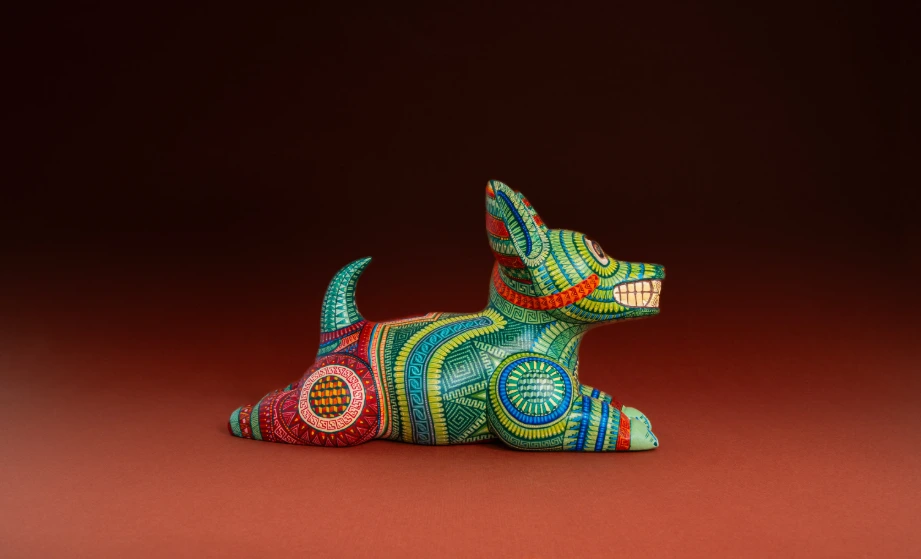
It is known that in Pre-Hispanic Mexico there were four breeds of dog; the itzcuintli (the common dog), the xoloitzcuintli (hairless dog), the malix (Maya dog), and the tlalchichi: a small, squat, round dog that originated in the West of Mesoamerica in the current states of Nayarit, Colima, Sinaloa, Jalisco, and Michoacán. The close relationship with these animals, their presence in the daily and religious life of people, indicates the significance of the dog in the worldview of the peoples of the West.
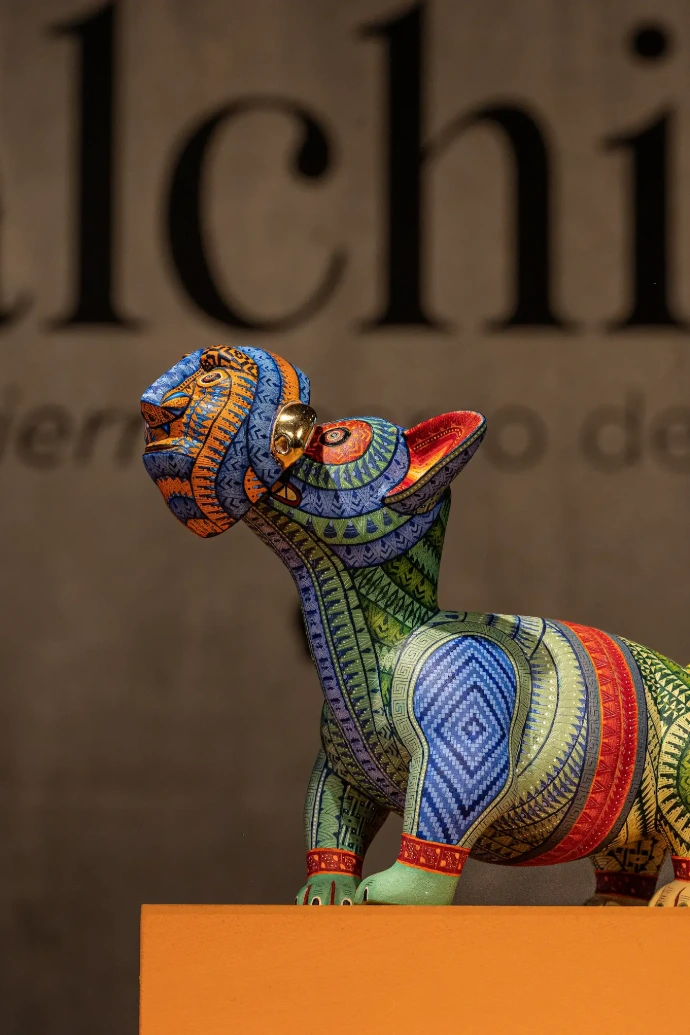
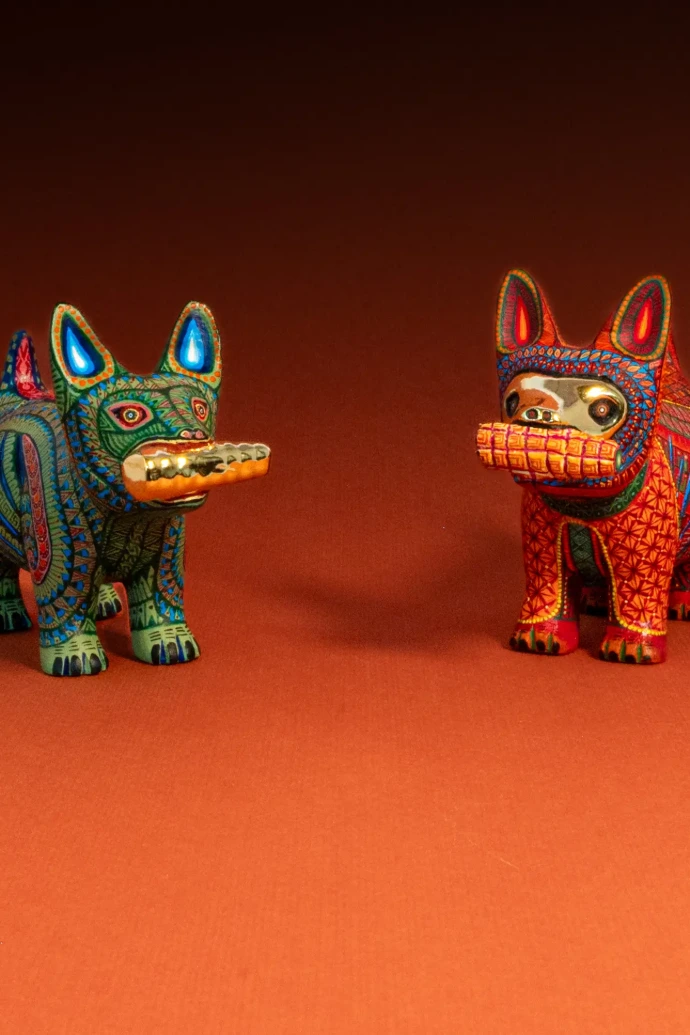
Lying down, eating, dancing, the tlalchichis are dressed in outfits that evoke ornamented skins in colors inspired by pre-Hispanic codices. The workshop has generated dynamic combinations where red, green, orange, and blue tones come together through Zapotec iconography. These symbols are interpreted from the creativity of the artists and artisans of the workshop, who, through the techniques of carving, painting, and meticulous application of gold leaf, bring to life the relationship between dogs and humans. In this way, it significantly contributes to the preservation and transmission of our valuable pre-Hispanic heritage.
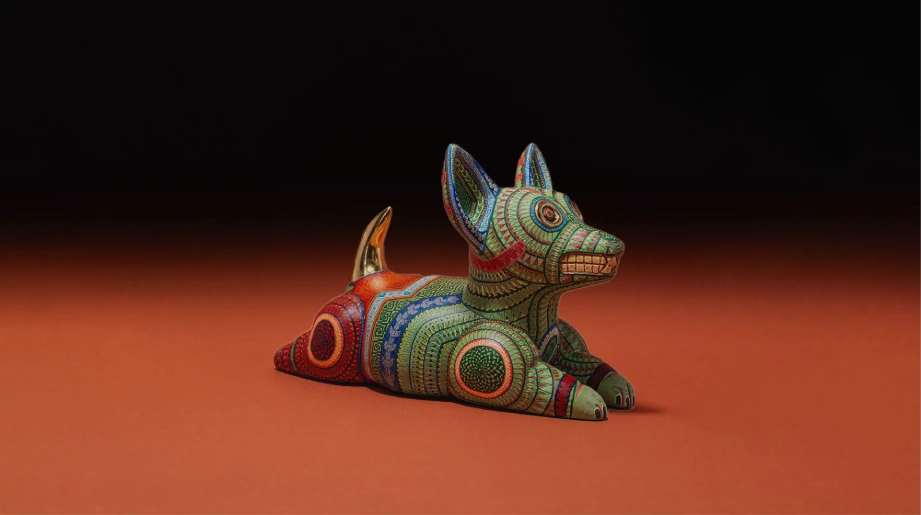
The Workshop of Jacobo and María Ángeles, committed to preserving this identity, creates this collection based on reflections on the representation and symbolism of the tlalchichi to weave paths where the past and present merge into new characters that seek their legitimization from the Mesoamerican worldview and their current place. Materiality and symbolism engage in the exhibition as elements that propose an approach to what dogs were and what they are in our lives, and suggest an unavoidable future where we are accompanied by these loyal beings.
For more information about this collection or any other, please fill out the following form and we will get in touch with you.