Zapotec Calendar
The Zapotec Calendar consists of 13 months made up of 20 days. Each day is governed by an animal, creating a cycle that repeats month after month.
In the Museum of the Cultures of Oaxaca, there is a board of this calendar, which features the images of the 20 animals that constitute it. However, some elements of the piece are illegible due to wear, leaving the rest of its information incomplete, almost like a secret.
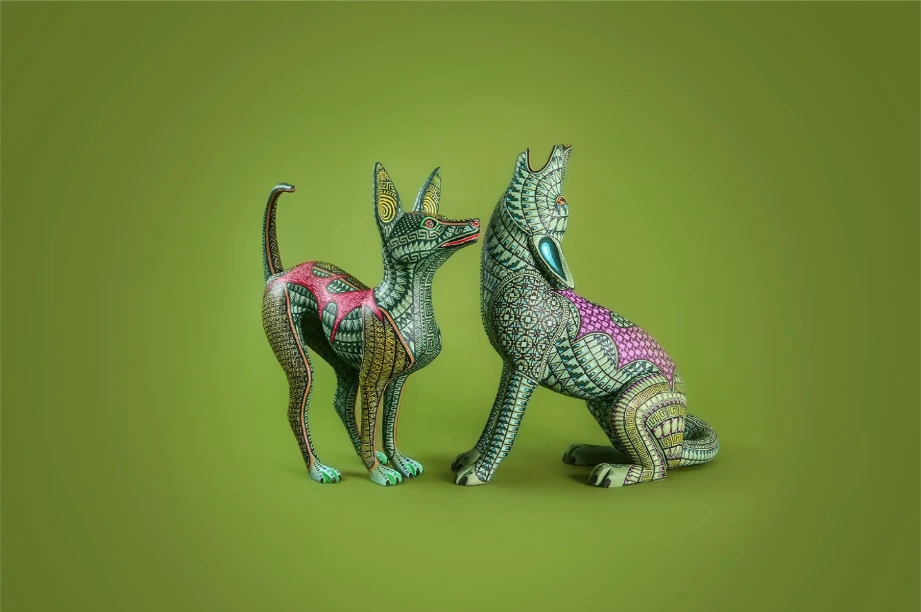
Many years ago, this fact awakens a deep attraction in the minds of the masters Jacobo and María, who, appreciating this relic, become interested in the mysticism of this way of understanding, organizing, and living time. This is how the Zapotec Calendar collection is born, the result of extensive research that began in the late 90s, which has been nourished over the years, and which, by giving body and form to the craft of creating carved wooden figures, is practiced as an artistic and spiritual endeavor.
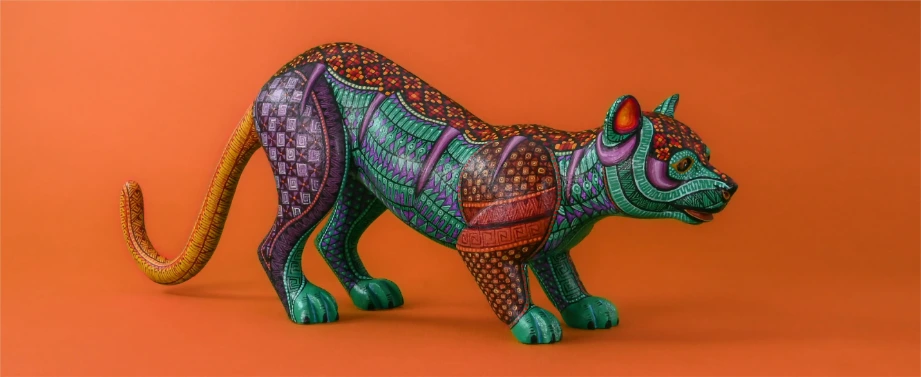
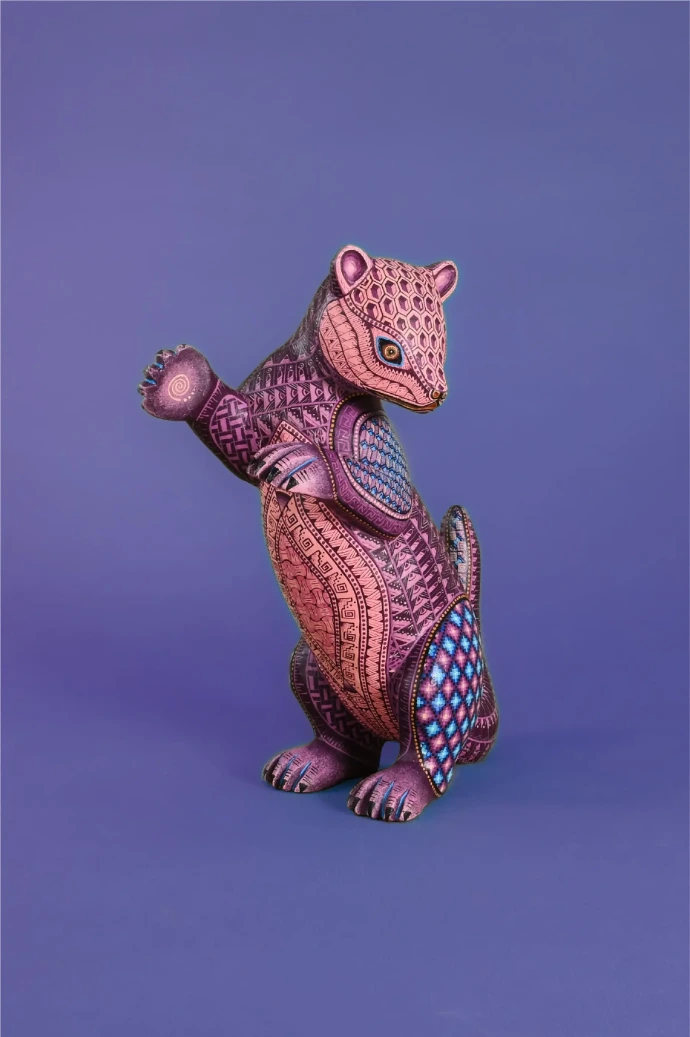
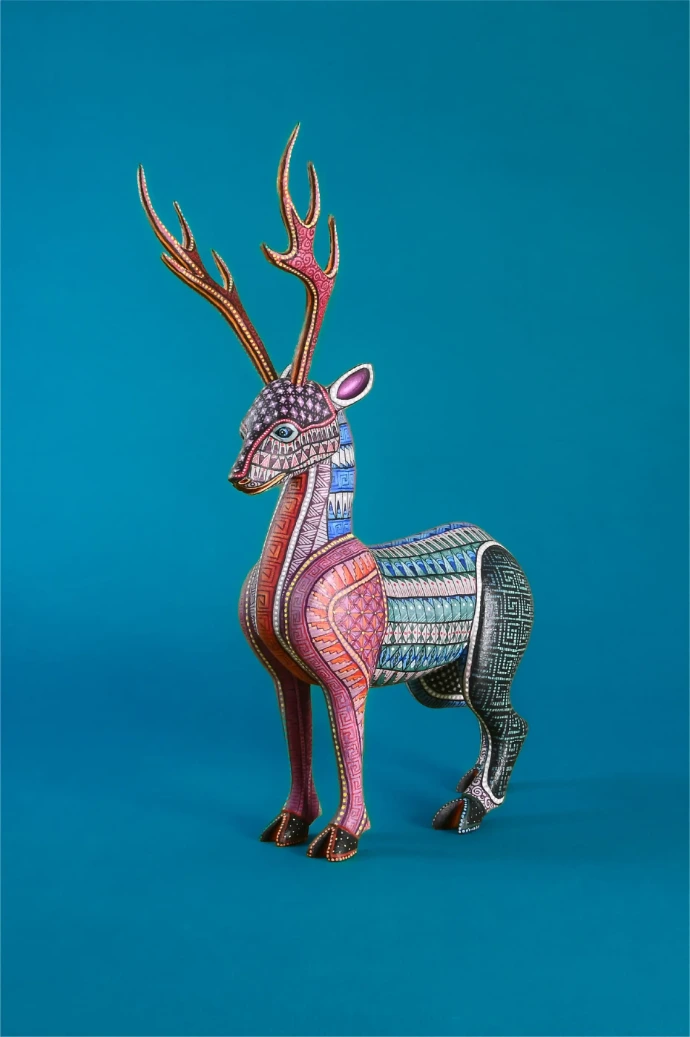
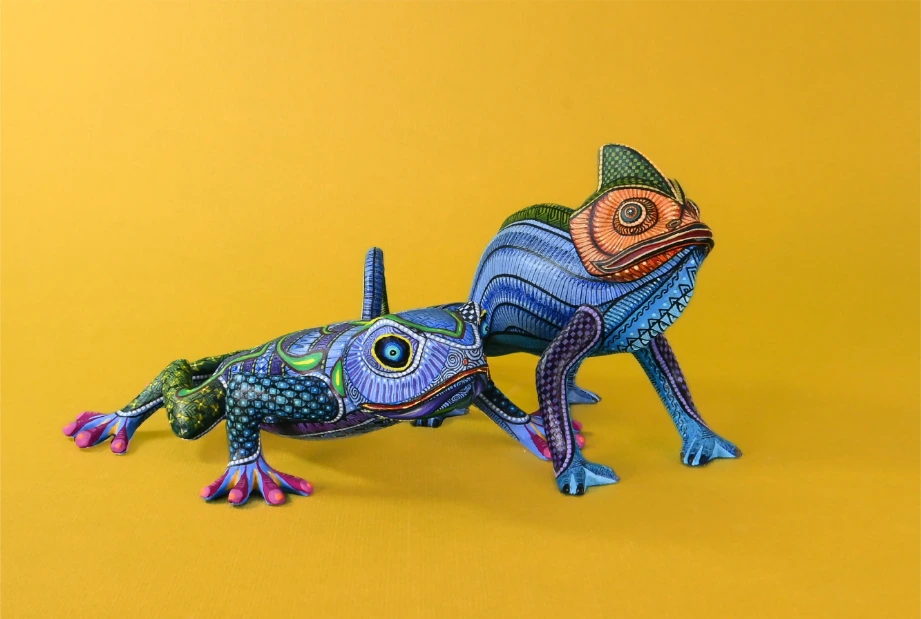
Iguana, coyote, turtle, chameleon, snake, armadillo, deer, rabbit, frog, dog, monkey, owl, opossum, jaguar, eagle, cenzontle, butterfly, snail, fish, hummingbird: these are 20 animals interpreted from different worldviews, families, and ethnic groups. Animals that inhabit the various regions of the State of Oaxaca. Each community has had a different relationship with each of them, generating a multiplicity of connotations, while also coinciding on core points that denote the true nature of each animal.
The Jacobo and María Ángeles workshop proudly and knowledgeably presents this series of pieces. A project that ranges from miniature silver jewelry, the already classic wood carving, to the conception of monumental exercises. As a way of thanking for their 28 years, the workshop is pleased to present the origin of its artistic understanding, also inspiring the worldview of the tonas and nahuales.
The history of the workshop with the Zapotec Calendar emerges from the particularities of memory, myth, and legend, as well as from the coincidences in the primary values of culture. An allegory to the construction of a sense of belonging and identity. Being, and knowing oneself as Zapotec.
For more information about this collection or any other, please fill out the following form and we will get in touch with you.