Plague
The workshop Jacobo and María Ángeles presents "Plague," a sharply reflective collection that inhabits the boundaries of what we consider beautiful and what we passionately reject as unpleasant.
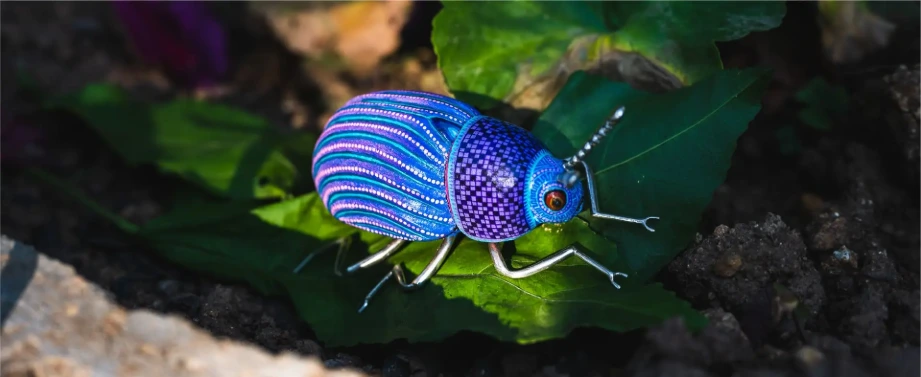
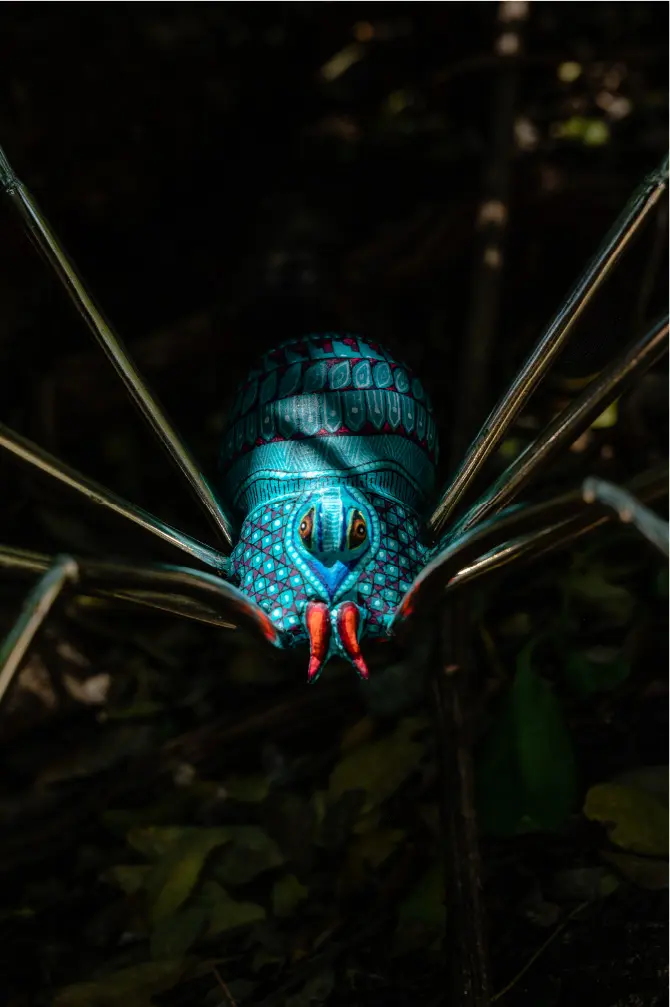
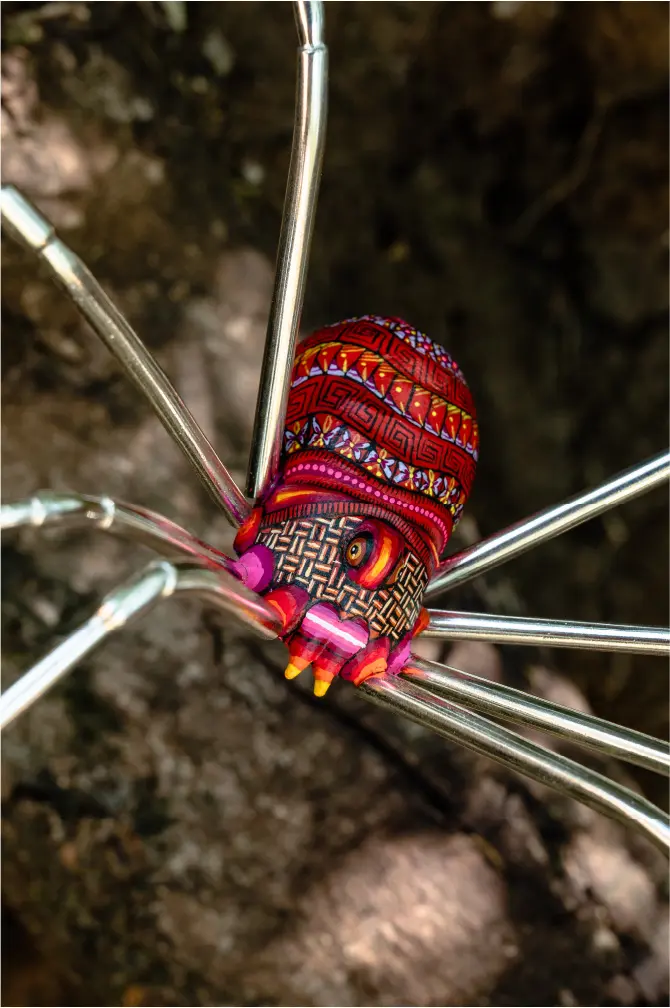
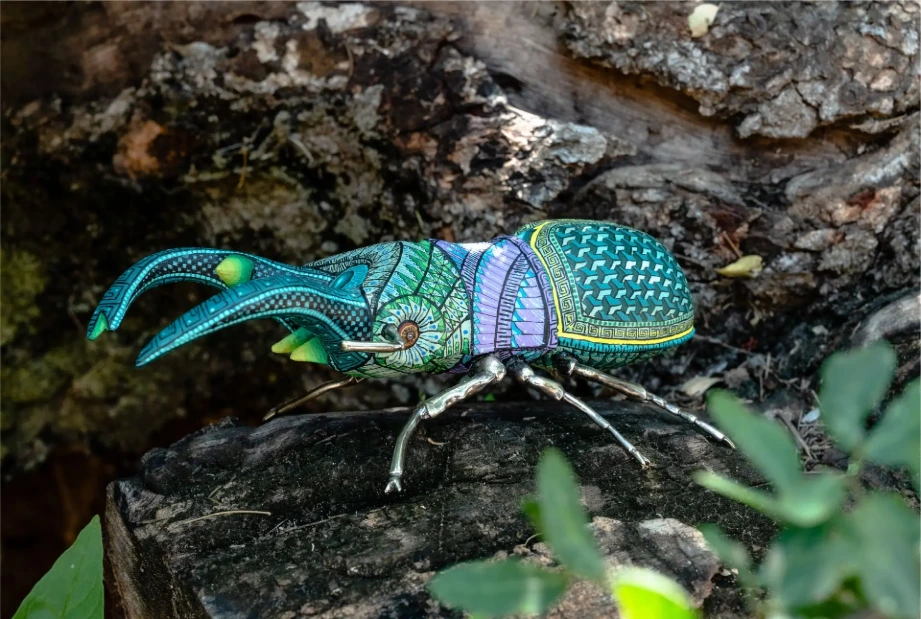
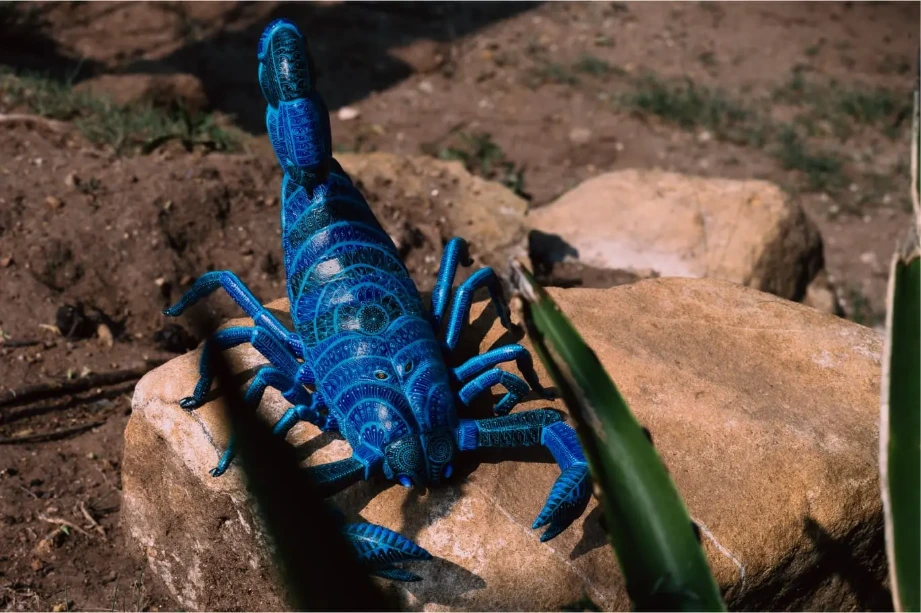
The anxiety or repulsion commonly produced by insects considered pests is nullified by the meticulous details of Zapotec iconography, the silver details, and the gold leaf finishes that adorn these crunchy bugs carved from copal wood.
The narrative in the work of Jacobo and María Ángeles in this exhibition reaffirms the uncomfortable commitment to the pest, contrasting the relationship between the forms of the beautiful and the repugnant that can be inverted depending on the perspective of the observer. With a double visual meaning, the masters confront our notion of the desired, the beautiful, what we want to possess, and what we want to be a part of.
No matter how small and insignificant these beings may seem, they emerge from the corners like a great question that floods the room: Who is really the plague?
The masters Jacobo and María Ángeles have managed to decode the plague, making it now appear as an object of desire. Plague presents to us what we do not want to see and represents an intimate condition of the world without feeling or assuming the responsibility of coexisting with other species.
This collection launched in 2021 is the first production that integrates three sibling projects: the Jacobo & María Ángeles Workshop carved the wood, decorated the pieces, and applied gold leaf. Jacobo and María Ángeles Jewelry sculpted the insect legs in silver, and finally, Mogote Ceramics created the dung balls used for the installation of the pieces. This production was a great challenge that combined all the techniques and crafts worked within the Workshop. Achieving it allowed us to grow exponentially in the conceptual, technical, and professional character of our projects.
“This exhibition reaffirms the uncomfortable commitment to the plague, contrasting the relationship between the forms of the beautiful and the repugnant that can be inverted depending on the perspective of the observer.”
For more information about this collection or any other, please fill out the following form and we will get in touch with you.